Newsroom | From compliance to strategy: how measuring climate risks is redefining industrial resilience
In a recent featured article by Option Finance, the spotlight was turned on a groundbreaking collaboration between Blunomy and Danone. The piece explores how the global food leader moved beyond simple regulatory reporting to transform climate risk assessment into a powerful engine for strategic decision-making.
The shift: from moral debate to economic reality
As Sébastien Guillo, CEO of Blunomy, highlights in the article, the "sustainability" function is rapidly merging with corporate finance. We are witnessing a fundamental shift: decarbonization and climate adaptation are no longer just ESG line items; they are levers for capital allocation and operational resilience. As Sébastien Guillo, CEO of Blunomy notes "When an environmental issue is translated into an economic impact, it moves beyond a 'moral' debate and enters the framework of a standard business decision, where choices are made based on risk assessment."
The challenge: translating science into operations
The core of Blunomy’s mission is bridging the gap between complex climate science and daily business operations. While scientific models for carbon, water, and biodiversity have advanced, converting that data into actionable business choices remains a hurdle for many.
For Danone, the entry into force of the CSRD (Corporate Sustainability Reporting Directive) served as a catalyst. Rather than viewing the directive as a mere compliance exercise, Danone chose to use it as a strategic lever. The goal? To conduct a deep diagnostic of their entire value chain to determine if, and by how much, their long-term strategic plans needed to evolve.
"We could have treated the CSRD as a simple matter of regulatory compliance, but we chose to turn it into a strategic lever by conducting a comprehensive diagnostic."
— Nathalie Alquier, chief sustainability officer de Danone
A massive undertaking in data and modeling
The project was an exercise of unprecedented scale. Blunomy supported Danone in mapping the physical climate risks for 37 raw materials and 1,400 sites worldwide (including industrial, logistical, and research centers).
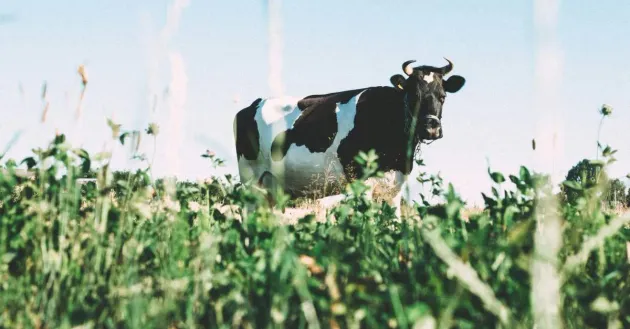
The complexity lay in the granularity. We examined the "second level" of the supply chain, for example, not just the dairy sites themselves, but the agricultural conditions affecting cow feed. By crossing imperfect internal data with high-level scientific models, we created a coherent financial map of climate risks across various scenarios.
Real-world outcomes: the "Resilience Filter"
The results have led to concrete operational shifts at Danone:
- Supply chain realignment: The concept of "resilience" has been integrated into daily procurement through a "resilience filter," helping teams prioritize the most critical risks in their sourcing.
- Regenerative agriculture: Danone has "changed gears," significantly increasing the number of farmers supported in regenerative practices, from a few hundred to several thousand, to minimize the impact of extreme climate events.
- Financial advantage: By understanding the "cost of inaction," Danone has gained a head start in risk mastery, which increasingly influences the terms of their credit lines and investor relations.
Conclusion: the cost of inaction
This collaboration demonstrates that the most significant risk is often invisibility. By making climate risks visible and quantifiable, organizations can choose their level of exposure and calibrate their investments accordingly. As the financial sector begins to catch up with these non-linear risks, early movers like Danone are not just protecting their assets, they are securing a competitive advantage in a volatile future.
→ Read the full analysis and expert insights in the original Option Finance article